Human Anatomy Laboratory Manual with Cat Dissections (Marieb) ౼ Article Plan
This manual‚ by Marieb & Smith‚ is a widely used resource for anatomy and physiology labs‚ offering detailed dissection guides and visual aids for learning.
Marieb’s manual provides a comprehensive‚ hands-on approach to learning human anatomy‚ integrating cat dissections to illustrate anatomical structures and physiological functions effectively.
Overview of the Textbook
Marieb’s Human Anatomy Laboratory Manual with Cat Dissections serves as a foundational text for students embarking on their study of human anatomy. The manual is meticulously designed to complement a standard anatomy and physiology course‚ providing a practical‚ laboratory-based learning experience. It distinguishes itself through its integration of cat dissection‚ offering a comparative anatomical perspective that enhances understanding of human structures.
The textbook isn’t merely a set of instructions; it’s a guided exploration. Each exercise is carefully structured to build upon previous knowledge‚ progressively introducing more complex anatomical concepts. It emphasizes both identification and functional correlation‚ encouraging students to not only locate structures but also understand their roles within the body. The manual’s organization facilitates a systematic approach to learning‚ making it an invaluable tool for both novice and experienced students alike.
Target Audience and Prerequisites
Marieb’s manual is primarily aimed at undergraduate students enrolled in introductory anatomy and physiology courses‚ particularly those with a laboratory component. It’s ideally suited for students in allied health programs – such as nursing‚ respiratory therapy‚ and medical assisting – as well as biology majors seeking a hands-on understanding of anatomical structures.
While no strict prerequisites are formally listed‚ a basic understanding of biological principles is highly recommended. Familiarity with fundamental chemistry and cell biology will prove beneficial. Students should possess a willingness to engage in dissection and a commitment to careful observation. A foundational knowledge of scientific methodology and laboratory safety protocols is also essential for successful completion of the exercises within the manual. Prior experience isn’t required‚ but a proactive learning attitude is key.
Editions and Authorship (Marieb & Smith)
Elaine N. Marieb is the principal author of this widely adopted laboratory manual‚ renowned for her clear and accessible writing style in anatomy and physiology textbooks. She collaborated with Susan J. Mitchell and Kevin T. Patton on earlier editions‚ but currently‚ the authorship primarily features Marieb alongside Patricia Brady Wilhelm.
Numerous editions have been published‚ reflecting updates in anatomical knowledge and pedagogical approaches. The 8th edition (ISBN 978-0134259529) is a current version‚ frequently utilized in academic settings. Each edition builds upon previous iterations‚ incorporating revised illustrations‚ updated exercises‚ and enhanced safety guidelines. The consistent quality and thoroughness of Marieb’s work have established this manual as a cornerstone resource for anatomy and physiology education.
Key Features and Organization
The manual excels with detailed dissection guides‚ comprehensive lab exercises‚ and high-quality visual aids—diagrams and illustrations—promoting effective anatomical study.
Laboratory Exercises and Dissection Guides
Marieb’s manual provides a structured series of laboratory exercises designed to reinforce anatomical concepts through hands-on experience. These exercises progressively build skills‚ starting with basic identification and moving towards complex dissection procedures. The dissection guides are exceptionally detailed‚ offering step-by-step instructions accompanied by clear illustrations.
Students benefit from pre-lab review questions‚ which prepare them for the practical work‚ and post-lab quizzes to assess their understanding. The exercises cover a broad range of anatomical systems‚ ensuring comprehensive coverage of the subject matter. The guides emphasize careful observation and precise technique‚ crucial for developing a strong foundation in anatomical knowledge. Furthermore‚ the manual often includes supplemental exercises and activities to cater to diverse learning styles and enhance engagement.
Visual Aids: Diagrams and Illustrations
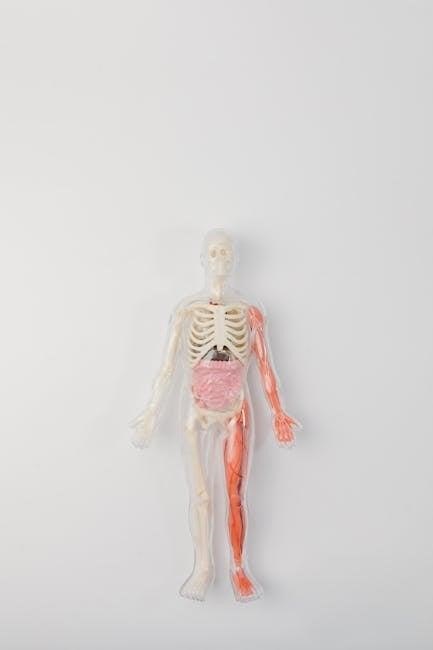
Marieb’s laboratory manual excels in its integration of high-quality visual aids. Numerous full-color diagrams and detailed illustrations are strategically placed throughout the text to complement the dissection guides and laboratory exercises. These visuals aren’t merely decorative; they actively aid in understanding complex anatomical structures and relationships.
The illustrations often feature labeled diagrams‚ allowing students to pinpoint specific anatomical features. Photographic images of dissections provide realistic representations of the structures being studied. The clarity and precision of these visuals are particularly valuable for students who learn best through visual means. Moreover‚ the manual utilizes different types of visual representations – schematic diagrams‚ cross-sections‚ and surface anatomy – to offer a multifaceted understanding of the human body.
Safety Protocols in the Laboratory
Marieb’s manual dedicates significant attention to establishing and reinforcing crucial safety protocols for the anatomy laboratory. A comprehensive section outlines potential hazards associated with dissection‚ including handling preserved specimens‚ using sharp instruments‚ and proper disposal of biological waste. Students are guided on the correct use of dissection tools‚ emphasizing techniques to minimize risk of injury.
The manual stresses the importance of personal protective equipment (PPE)‚ such as gloves‚ goggles‚ and lab coats‚ to prevent exposure to potentially harmful substances. Detailed instructions cover proper handwashing procedures and disinfection protocols. Furthermore‚ it highlights responsible handling and disposal of specimens‚ adhering to ethical and environmental guidelines. This commitment to safety ensures a secure learning environment for all students.
Cat Dissection Component
Marieb’s manual utilizes cat dissection to illustrate anatomical structures‚ providing a hands-on experience and a comparative model for understanding human anatomy.
Rationale for Using Cats in Dissection
Marieb’s laboratory manual employs cat dissection due to significant anatomical similarities between cats and humans. This allows students to readily apply their dissection findings to a deeper understanding of human anatomy and physiology. The cat’s internal organ systems closely mirror those of humans in terms of structure and function‚ making it an effective comparative model.
Furthermore‚ cats are readily available and ethically sourced for dissection purposes‚ offering a practical and accessible learning experience. The size of the cat also facilitates easier manipulation and detailed observation of anatomical structures compared to larger animals. While ethical considerations are paramount‚ the benefits of using cats for dissection in enhancing anatomical knowledge remain substantial within the context of this manual.
System-by-System Dissection Approach
Marieb’s manual utilizes a systematic dissection approach‚ guiding students through each anatomical system individually – skeletal‚ muscular‚ nervous‚ and more. This method promotes focused learning and a comprehensive understanding of each system’s structure and function. Students begin with superficial dissections‚ gradually progressing to deeper layers‚ ensuring a logical and progressive learning curve.
Each system’s dissection is accompanied by detailed instructions‚ clear diagrams‚ and review questions. This structured approach allows students to build a solid foundation in anatomical knowledge. The manual emphasizes identifying key structures within each system and understanding their relationships to one another‚ fostering a holistic view of feline anatomy and its relevance to human anatomy.
Comparative Anatomy: Cat vs. Human
Marieb’s manual skillfully integrates comparative anatomy‚ highlighting similarities and differences between feline and human anatomical structures. This approach enhances understanding of human anatomy by leveraging the cat’s relatively simpler systems as a model. Students learn to identify homologous structures – those with shared ancestry but potentially different functions – fostering a deeper appreciation for evolutionary relationships.
The manual points out key distinctions‚ such as bipedalism in humans versus quadrupedalism in cats‚ and the resulting skeletal and muscular adaptations; It encourages students to analyze how structural variations correlate with functional differences‚ strengthening analytical skills. This comparative perspective solidifies anatomical knowledge and provides a broader biological context.
Specific Anatomical Systems Covered
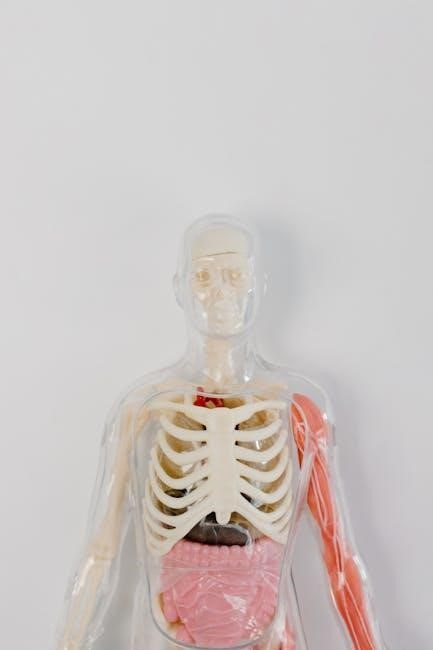
Marieb’s manual comprehensively explores systems like skeletal‚ muscular‚ and nervous‚ utilizing cat dissections to illustrate anatomical relationships and functional principles effectively.
Skeletal System Dissection
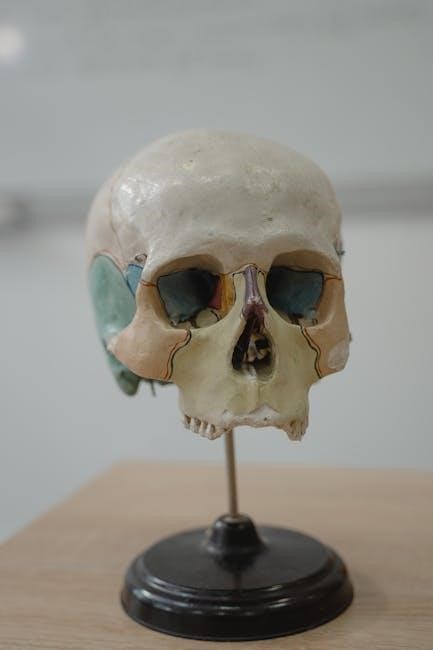
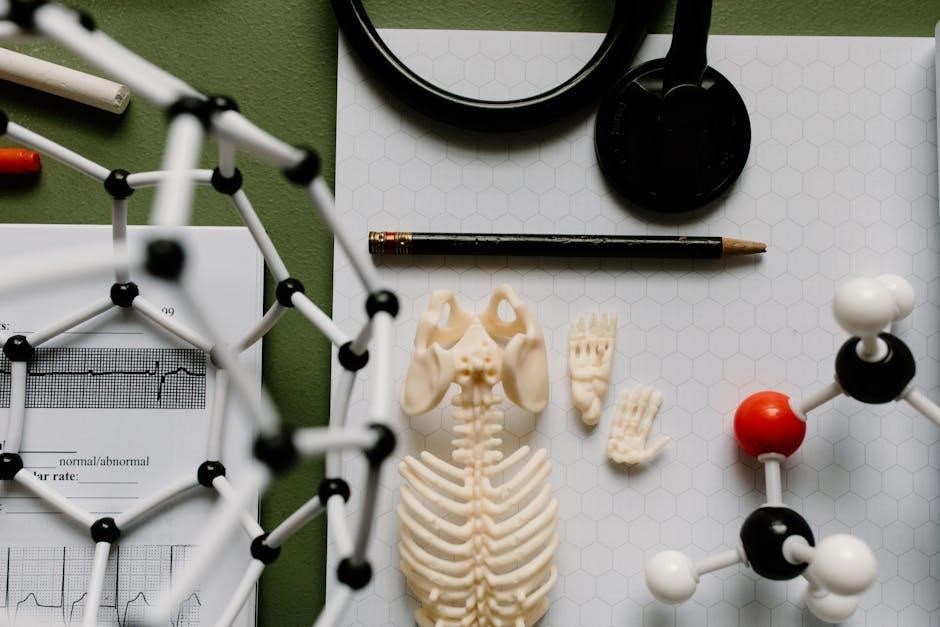
The skeletal system dissection within Marieb’s Human Anatomy Laboratory Manual with Cat Dissections provides a foundational understanding of bone structure‚ classification‚ and articulation. Students meticulously examine the feline skeleton‚ identifying individual bones – from the cranial and vertebral columns to the appendicular skeleton’s limbs.
Emphasis is placed on recognizing key features like bone markings‚ processes‚ and foramina‚ correlating these structures with their functions. Comparative analysis between the cat and human skeletal systems highlights both similarities and differences‚ fostering a deeper appreciation for evolutionary adaptations.
The manual guides students through joint identification‚ classifying them based on their range of motion. Practical exercises involve bone measurement and observation of skeletal muscle attachments‚ solidifying anatomical knowledge and preparing students for advanced studies in biomechanics and physiology.
Muscular System Dissection
Marieb’s manual’s muscular system dissection focuses on identifying and analyzing the major skeletal muscles of the cat. Students learn to differentiate muscle types – skeletal‚ smooth‚ and cardiac – and understand the principles of muscle contraction. The dissection guides students through careful removal of skin and superficial fascia to expose underlying muscle layers.
Emphasis is placed on recognizing muscle origins‚ insertions‚ actions‚ and innervations. Students trace muscle fibers and observe their arrangement‚ relating structure to function. Comparative anatomy highlights similarities and differences between feline and human musculature‚ illustrating evolutionary adaptations.

Practical exercises involve palpating muscles and observing their actions during simulated movements‚ reinforcing anatomical understanding and preparing students for advanced physiological studies.
Nervous System Dissection
Marieb’s manual guides students through the complex dissection of the cat’s nervous system‚ beginning with the brain and spinal cord. Detailed instructions facilitate the identification of major brain regions – cerebrum‚ cerebellum‚ and brainstem – and their associated structures. Students trace the pathways of cranial nerves and explore the protective layers of the meninges.
The dissection extends to the spinal cord‚ revealing the arrangement of gray and white matter. Peripheral nerves are carefully exposed‚ demonstrating their distribution throughout the body. Emphasis is placed on understanding the relationship between nervous system structure and its role in sensory perception‚ motor control‚ and integration.
Comparative analysis highlights key differences between feline and human nervous systems.

Supplemental Materials and Resources

The Marieb manual is often accompanied by online resources‚ study guides‚ practice quizzes‚ and instructor support materials to enhance the learning experience.
Online Resources and Companion Website
Pearson’s companion website for the Marieb Human Anatomy Laboratory Manual with Cat Dissections provides a wealth of supplementary materials designed to reinforce learning and facilitate comprehension. Students can typically access practice quizzes‚ interactive exercises‚ and detailed animations illustrating complex anatomical structures and physiological processes.
These digital resources often include labeling exercises to test knowledge of anatomical terminology‚ and virtual dissection tools that complement the hands-on laboratory experience. Instructors benefit from downloadable resources such as pre-lab quizzes‚ answer keys‚ and image banks for creating presentations. The website serves as a central hub for both students and educators‚ extending the learning environment beyond the physical laboratory and promoting a more dynamic and engaging educational experience.
Study Guides and Practice Quizzes
Numerous study aids accompany Marieb’s Human Anatomy Laboratory Manual with Cat Dissections‚ designed to bolster student understanding and exam preparation. These resources commonly include chapter-specific study guides featuring key terms‚ review questions‚ and clinical applications. Practice quizzes‚ often available both in print and online‚ allow students to self-assess their grasp of anatomical structures and physiological concepts.
Many editions offer labeling exercises‚ fill-in-the-blank questions‚ and multiple-choice assessments mirroring the format of typical laboratory practical exams. Supplemental materials like flashcards can further aid in memorization of anatomical terminology. Utilizing these study tools proactively helps students solidify their knowledge and build confidence for successful performance in anatomy and physiology coursework.
Instructor Resources and Support
Instructors utilizing Marieb’s Human Anatomy Laboratory Manual with Cat Dissections benefit from a comprehensive suite of support materials. These typically include an instructor’s manual containing detailed answers to all lab exercises‚ dissection guides‚ and practical exam questions. PowerPoint presentations‚ often pre-populated with high-quality images from the manual‚ streamline lecture preparation.
Furthermore‚ publishers frequently offer online resources‚ such as a learning management system (LMS) integration package‚ allowing for easy assignment distribution and grade tracking. Technical support is generally available to assist instructors with any questions regarding the manual or accompanying materials‚ ensuring a smooth and effective teaching experience.
Usefulness and Limitations
Marieb’s manual excels in detailed dissection guidance and visual learning‚ but ethical concerns regarding animal use and cost may present limitations for some institutions.
Strengths of the Marieb Cat Dissection Manual
A significant strength lies in its comprehensive and meticulously detailed laboratory exercises. The manual provides students with a structured‚ system-by-system approach to cat dissection‚ directly correlating anatomical structures to human anatomy. This comparative aspect is invaluable for understanding human physiology and morphology.
Furthermore‚ the inclusion of high-quality diagrams and illustrations significantly enhances the learning experience‚ offering clear visual representations of complex anatomical features. The manual’s organization is logical and user-friendly‚ making it accessible for students with varying levels of prior knowledge.

The detailed safety protocols are also a crucial benefit‚ ensuring a secure laboratory environment. Finally‚ the widespread adoption of this manual indicates its proven effectiveness as a teaching tool in anatomy and physiology courses‚ supported by readily available supplemental resources.
Potential Drawbacks and Ethical Considerations
A primary drawback centers around the ethical concerns associated with animal dissection. The use of cats raises questions about animal welfare and the justification of using animals for educational purposes‚ prompting debate among students and educators.
Additionally‚ the cost of obtaining and preserving specimens can be substantial for institutions. Some students may find the dissection process emotionally challenging or have religious objections.
Alternatives‚ such as virtual dissection software‚ are becoming increasingly available‚ though they may not fully replicate the tactile learning experience of working with a physical specimen. Careful consideration of these ethical implications and exploration of alternative methods are crucial when utilizing this manual.