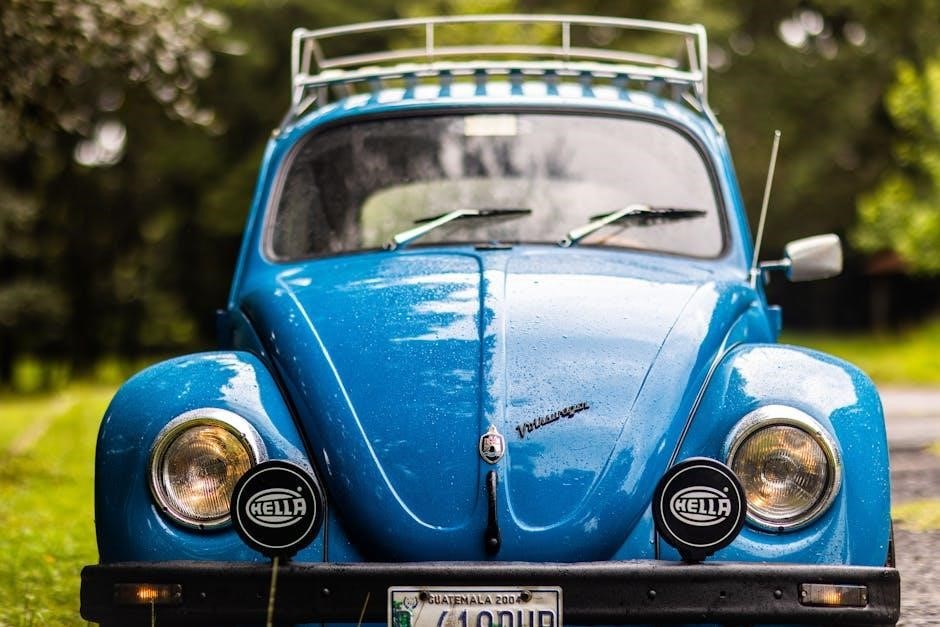
This comprehensive guide, stemming from Volkswagen’s rich history, details repair and maintenance for your classic Bug. Germanika, and Major dealerships
offer support.
What is a VW Beetle Manual and Why is it Important?
A VW Beetle Manual, often referred to as a “Bug” manual, is a detailed guide encompassing all aspects of the vehicle – from routine maintenance to complex repair procedures. These manuals, built upon Volkswagen AG’s extensive documentation, are invaluable resources for owners and enthusiasts alike. They provide step-by-step instructions, diagrams, and specifications crucial for understanding and maintaining these iconic cars.

Why is it important? The Beetle’s age means parts availability can be challenging, and specialized knowledge is often required. A manual bridges this gap, empowering owners to perform repairs themselves, saving on potentially high costs from dealerships like Germanika or Major. Furthermore, understanding your Beetle’s systems – electrical, fuel, or cooling – allows for proactive maintenance, preventing larger issues down the road. Accessing the largest knowledge base, with 74,000 photos, ensures accurate and informed repairs, preserving the Beetle’s legacy.
Brief History of the Volkswagen Beetle
The Volkswagen Beetle, born from a vision of “the people’s car” (Volks-wagen in German), began development in the 1930s, spearheaded by Ferdinand Porsche. Initially conceived as an affordable vehicle for the masses, production truly ramped up after World War II, becoming a symbol of post-war recovery in Germany. Volkswagen AG, headquartered in Wolfsburg, transformed the Beetle into a global phenomenon.

Its simple, yet robust design, coupled with its reliability, propelled it to international success. The Beetle’s enduring popularity spanned decades, with production continuing in various locations until 2003. Today, it remains a beloved classic, cherished by enthusiasts worldwide. Understanding its history is key to appreciating the engineering behind the car, and why dedicated resources – like comprehensive manuals – are vital for its continued preservation. Dealerships such as Germanika and Major continue to support the VW legacy.
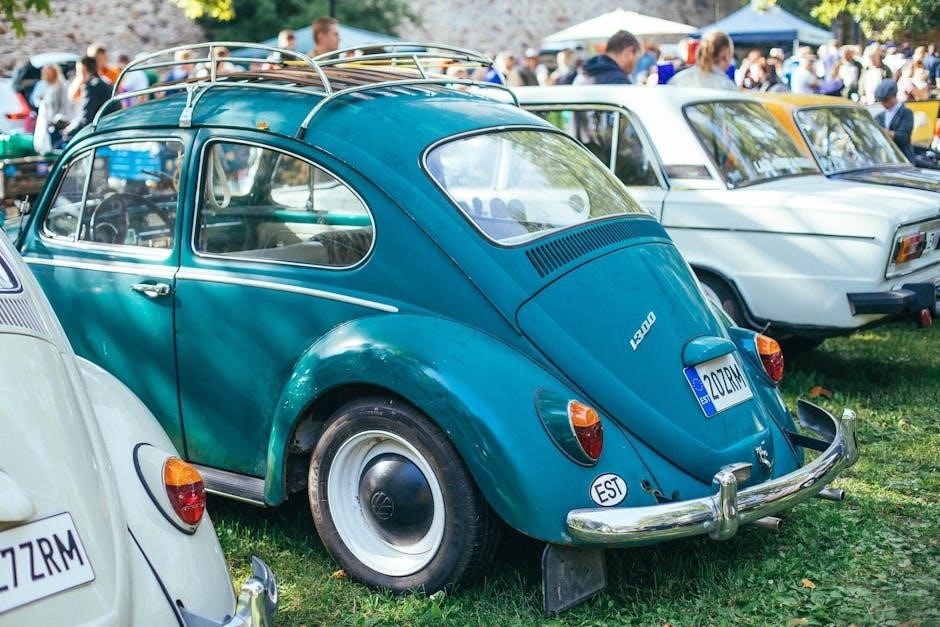
Understanding Your VW Beetle’s Components
Volkswagen’s engineering, showcased in models like the Golf 8, translates to the Beetle. Germanika and Major dealerships can assist with component familiarity.
Engine Specifications and Overview
The Volkswagen Beetle’s engine, a cornerstone of its enduring appeal, typically features an air-cooled, rear-mounted flat-four engine. Early models showcased displacements ranging from 1131cc to 1584cc, evolving over the years with incremental increases in power and efficiency. These engines, while relatively simple in design, demand diligent maintenance for optimal performance.
Key specifications include compression ratios varying between 6.6:1 and 8.0:1, depending on the year and model. Horsepower figures generally fall between 30 and 65 bhp, influencing the Beetle’s characteristic driving experience. Understanding the engine’s layout – with its horizontally opposed cylinders – is crucial for effective troubleshooting and repair.
Germanika and Major dealerships, while specializing in newer Volkswagen models, possess a wealth of knowledge regarding the foundational engineering principles applicable to the Beetle’s engine. Regular oil changes, utilizing appropriate viscosity grades, are paramount for longevity. Proper valve adjustment and carburetor tuning are also essential for maintaining peak engine performance.
Transmission and Drivetrain
The VW Beetle’s drivetrain is fundamentally simple yet robust, featuring a rear-wheel drive configuration. Early Beetles employed a four-speed manual transmission, known for its durability and straightforward operation. Later models saw the introduction of an optional automatic transmission, though the manual remained the prevalent choice among enthusiasts.
Understanding the transmission’s internal components – gears, synchromesh, and shift linkages – is vital for diagnosing and resolving shifting issues. The drivetrain also includes a differential, responsible for distributing power to the rear wheels, and driveshafts connecting the transmission to the wheels.
Regular inspection of the driveshaft boots for cracks or tears is crucial to prevent grease loss and subsequent damage. Maintaining proper transmission fluid levels is also essential for smooth shifting and longevity. While Germanika and Major primarily service modern Volkswagens, their expertise in automotive mechanics extends to understanding the principles governing the Beetle’s drivetrain.
Chassis and Suspension System
The Volkswagen Beetle’s chassis is a unibody construction, providing a solid foundation for the vehicle. Its suspension system, while basic, is designed for durability and relatively comfortable ride quality. The front suspension utilizes a trailing arm design with a transverse torsion spring, while the rear employs a swing axle setup, also with torsion springs.
Understanding the interplay between these components is key to addressing handling issues or ride imperfections. Inspecting the torsion springs for fatigue, checking the shock absorbers for leaks, and ensuring proper alignment are vital maintenance tasks. Worn bushings and ball joints can contribute to steering looseness and should be replaced as needed.
Although dealerships like Germanika and Major focus on newer models, the fundamental principles of chassis and suspension apply across generations. Maintaining the Beetle’s chassis involves rust prevention, particularly in areas prone to corrosion, ensuring its structural integrity for years to come.
Electrical System Basics
The VW Beetle’s electrical system, particularly in earlier models, is relatively simple, utilizing a 6-volt positive ground system. Later Beetles transitioned to a 12-volt negative ground configuration. Understanding polarity is crucial when diagnosing electrical faults. Key components include the battery, generator (or alternator in later models), starter, ignition system, and wiring harness.
Troubleshooting often involves checking fuses, connections, and the integrity of the wiring. A multimeter is an invaluable tool for testing voltage and continuity. Germanika and Major dealerships, while specializing in modern Volkswagens, can offer insights into electrical principles applicable to older models.
Proper grounding is essential for reliable operation. Inspect ground straps for corrosion and ensure secure connections. Familiarity with the Beetle’s wiring diagram is highly recommended for more complex repairs. Always disconnect the battery before working on the electrical system to prevent shorts and potential damage.

Routine Maintenance Procedures
Consistent upkeep, like oil changes and filter replacements, ensures longevity. Germanika and Major emphasize regular checks. Volkswagen reliability depends on diligent, scheduled servicing.
Oil Change Guide
Regular oil changes are paramount for your VW Beetle’s engine health. Begin by warming the engine slightly – not hot, just lukewarm. Locate the oil drain plug underneath the engine; have a suitable oil pan ready to catch the used oil. Carefully loosen and remove the drain plug, allowing the old oil to fully drain.
While draining, inspect the oil filter. Unscrew the old filter (an oil filter wrench is helpful) and lightly lubricate the rubber gasket of the new filter with fresh oil. Screw on the new filter hand-tight – do not overtighten! Once the oil has completely drained, reinstall the drain plug with a new crush washer, tightening it to the manufacturer’s specified torque.
Now, add the correct amount of new oil, consulting your VW Beetle manual for the precise capacity and recommended oil type. Check the oil level with the dipstick, ensuring it falls between the minimum and maximum marks. Finally, start the engine and let it run for a few minutes, checking for any leaks around the drain plug and oil filter. Properly dispose of the used oil at a designated recycling center.
Air Filter Replacement
Maintaining a clean air filter is crucial for optimal engine performance in your VW Beetle. Locate the air filter housing, typically a black plastic box near the carburetor. Release the clips or screws securing the housing lid and carefully remove it. Inside, you’ll find the air filter itself – note its orientation for correct reinstallation.

Gently remove the old air filter, being mindful of any debris that may fall into the air intake. Clean the inside of the air filter housing with a clean cloth, removing any dust or dirt. Take your new air filter and ensure it’s the correct type for your Beetle model. Install the new filter, matching its orientation to the old one.
Replace the air filter housing lid, securing it with the clips or screws. Ensure a tight seal to prevent unfiltered air from entering the engine. A clean air filter improves airflow, enhancing fuel efficiency and engine responsiveness. Regular inspection and replacement, as per your manual, are key to longevity.
Spark Plug Replacement
Replacing spark plugs is a vital maintenance task for your VW Beetle, ensuring efficient combustion and optimal engine performance. Begin by disconnecting the negative battery cable for safety. Locate the spark plugs – typically accessible by removing the valve cover. Carefully disconnect the spark plug wires, noting their firing order to avoid misfires during reassembly.
Use a spark plug socket to remove the old spark plugs. Inspect the old plugs for signs of wear or fouling, which can indicate engine issues. Gap the new spark plugs to the specification outlined in your VW Beetle manual – this is critical for proper ignition. Carefully thread the new spark plugs into the cylinder head by hand to avoid cross-threading.
Tighten the spark plugs to the correct torque specification using a torque wrench. Reconnect the spark plug wires in the correct firing order, and reconnect the negative battery cable. Start the engine and listen for smooth operation.
Brake System Inspection and Maintenance
Regular brake system inspection is paramount for safety in your VW Beetle. Begin by visually inspecting brake lines for leaks or damage. Check the brake fluid level and condition – low or dark fluid indicates a problem. Inspect brake pads for wear; replace if they’re thin or worn to the backing plate.
Examine brake rotors or drums for scoring, cracks, or excessive wear. If drums are used, check the internal shoe adjustment. Inspect wheel cylinders and calipers for leaks. Bleeding the brake lines removes air bubbles, ensuring firm pedal feel.
Lubricate brake cable mechanisms to ensure smooth operation. Tighten any loose components. Germanika and similar service centers can assist with complex repairs. Always test the brakes after any maintenance. Prioritize safety and consult a professional if unsure.

Troubleshooting Common Issues
Diagnosing problems in your Beetle requires a systematic approach. Germanika’s expertise and online forums offer valuable insights into engine faults, electrical issues, and fuel system concerns.
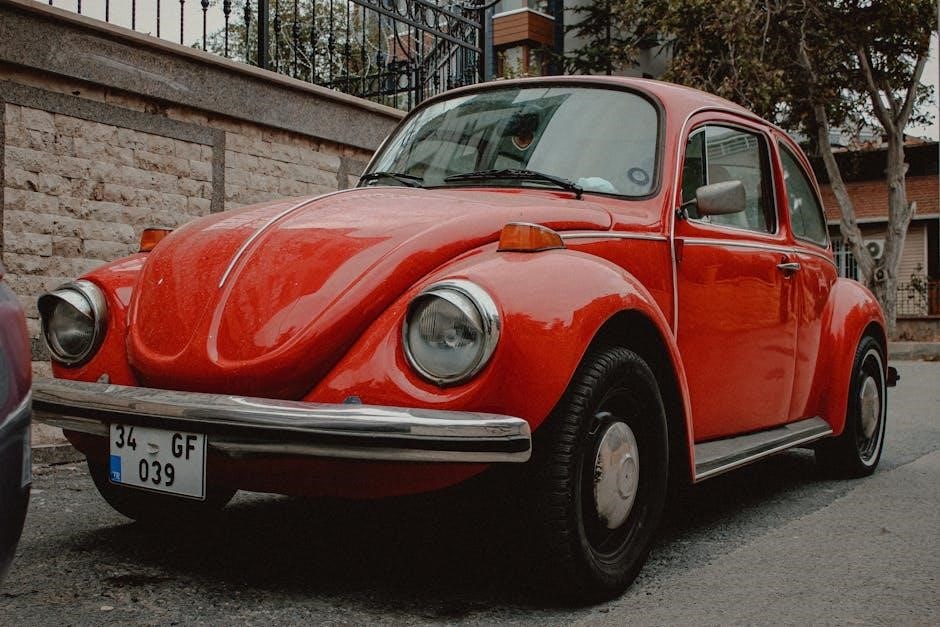
Engine Starting Problems
A frustrating issue for many Beetle owners is a reluctance to start. Several factors can contribute to this, demanding methodical investigation. First, verify the battery is fully charged and connections are clean – corrosion is a common culprit. Next, inspect the ignition system; a faulty coil, distributor cap, or points can prevent spark.
Fuel delivery is also critical. Ensure the fuel tank isn’t empty, the fuel line isn’t blocked, and the carburetor is functioning correctly. A clogged fuel filter restricts flow. Germanika technicians emphasize checking the choke, especially in cold weather, as an improperly adjusted choke hinders starting.
Compression is fundamental. Low compression, often due to worn piston rings or valves, makes starting difficult. Finally, consider the starter motor itself; a failing starter may crank slowly or not at all. Online communities provide detailed troubleshooting steps and diagrams for these systems.
Electrical Faults and Diagnosis
VW Beetle electrical systems, while relatively simple, can present perplexing faults. Begin with a visual inspection – check for corroded wires, loose connections, and blown fuses. A multimeter is invaluable for testing voltage and continuity. Grounding issues are frequent; ensure all components are properly grounded to the chassis.
Common problems include faulty wiring harnesses, especially in areas exposed to the elements. Headlight and turn signal failures often stem from bad bulbs or corroded sockets. Germanika suggests carefully examining the wiring diagram specific to your Beetle’s year.
Diagnosis requires a systematic approach. Isolate the problem by testing individual circuits. Online forums offer extensive troubleshooting guides and wiring schematics. Remember, Volkswagen’s early electrical systems are 6-volt, requiring appropriate testing equipment. Always disconnect the battery before working on electrical components to prevent shorts.
Cooling System Issues
VW Beetles, particularly air-cooled models, rely on efficient cooling to prevent overheating. Common issues include a clogged radiator (in water-cooled variants), a failing fan, or incorrect ignition timing. Germanika advises checking the coolant level regularly in water-cooled Bugs and inspecting for leaks.
Air-cooled Beetles depend on adequate airflow. Inspect the fan shroud and blades for damage. Ensure the engine ventilation system isn’t obstructed. Overheating can also result from a lean fuel mixture or excessive engine load.
Diagnosis begins with monitoring the temperature gauge. If overheating occurs, immediately pull over and allow the engine to cool. Check for coolant loss (water-cooled) or inspect the cooling fins (air-cooled) for debris. Volkswagen documentation provides detailed specifications for proper cooling system operation. Addressing cooling issues promptly prevents severe engine damage.
Fuel System Problems
VW Beetle fuel systems, varying by year, can experience issues like a clogged fuel filter, a failing fuel pump, or carburetor malfunctions. Germanika recommends regular fuel filter replacement to maintain optimal engine performance. Carburetor problems often manifest as rough idling, poor acceleration, or difficulty starting.
Diagnosis involves checking fuel delivery. Listen for the fuel pump operating when the ignition is turned on. Inspect fuel lines for leaks or kinks. A clogged fuel filter restricts fuel flow, causing engine starvation. Carburetor adjustments require specialized tools and knowledge; consult Volkswagen documentation or a qualified mechanic.
Modern fuel-injected Beetles may exhibit issues with fuel injectors or the fuel pressure regulator. Proper fuel pressure is crucial for efficient combustion. Ignoring fuel system problems can lead to reduced fuel economy and potential engine damage.
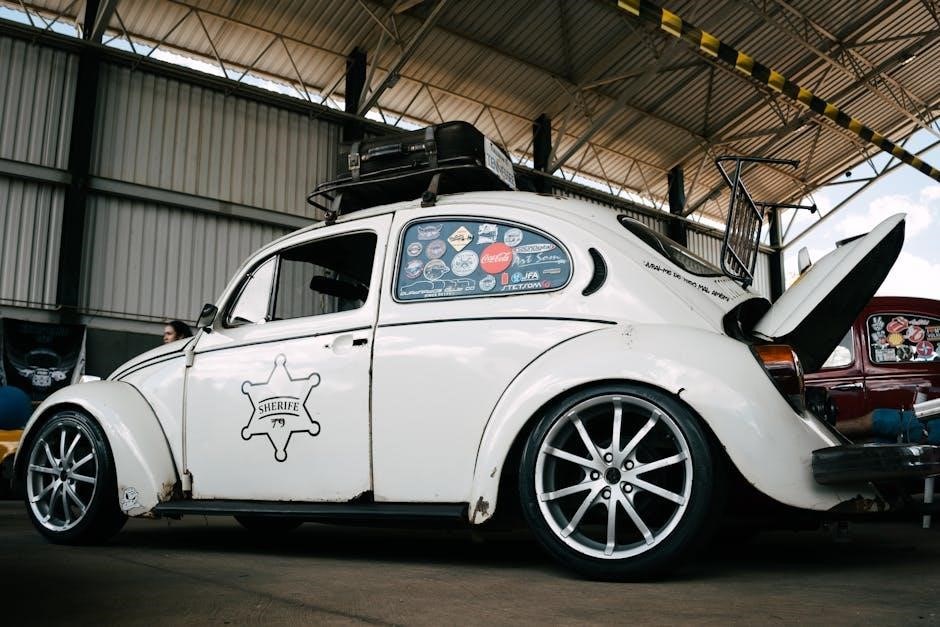
Repair Procedures
Detailed steps for common repairs – battery replacement, headlight fixes, and tire changes – are outlined. VW Deal days offer opportunities, while Germanika provides expert service.
Replacing the Battery
Safety first! Disconnect the negative terminal before the positive to avoid sparks. Locate the battery, typically in the rear engine compartment of your VW Beetle. Carefully remove the hold-down clamp securing the battery.
Disconnect the battery cables, noting their positions for reattachment. Lift the old battery straight up and out, being mindful of its weight. Clean the battery tray and cable terminals to prevent corrosion.
Position the new battery in the tray, ensuring correct polarity. Reconnect the cables – positive first, then negative. Secure the hold-down clamp;
Testing is crucial: Start the engine to verify proper function. Germanika and other VW specialists can assist if needed. Remember, a faulty battery can cause starting problems, as highlighted in troubleshooting guides. Proper disposal of the old battery is essential for environmental responsibility.
Headlight Replacement
Begin by disconnecting the negative battery terminal for safety – a crucial step detailed in battery replacement guides. Access the headlight assembly from behind the front fender, often requiring removal of an access panel. Disconnect the wiring harness connected to the headlight bulb.
Depending on the Beetle’s year, the headlight retaining ring may require a specific tool or can be carefully unscrewed. Remove the old bulb, handling it by the base to avoid contamination.
Install the new bulb, ensuring it’s properly seated. Reattach the retaining ring and wiring harness. Test the headlight functionality before fully reassembling everything.
If issues persist, consult resources like Germanika or online VW forums. Proper headlight operation is vital for safe driving. Remember, Volkswagen prioritizes safety and quality in all components.
Tire Change and Wheel Alignment
Before commencing, ensure the Beetle is parked on a level surface and engage the parking brake. Loosen the lug nuts slightly with a lug wrench – do not remove them completely yet. Utilize a jack to lift the vehicle at the designated jacking points, consulting your VW Beetle manual for precise locations.
Once lifted, fully remove the lug nuts and carefully pull the wheel off. Mount the spare tire, ensuring it’s flush against the hub. Hand-tighten the lug nuts in a star pattern.
Lower the vehicle and fully tighten the lug nuts with the wrench, again in a star pattern. Post-tire change, a wheel alignment check is highly recommended, especially if you notice pulling or uneven wear. Germanika can assist with professional alignment services.
Regular checks ensure optimal handling and tire longevity, aligning with Volkswagen’s commitment to vehicle performance.
Resources and Further Information
Explore online forums and communities for Beetle enthusiasts, alongside official Volkswagen documentation. Germanika and Major dealerships provide parts and expert advice.
VW Beetle Parts Suppliers
Sourcing parts for your VW Beetle, often affectionately called the “Bug,” requires navigating a diverse market. Fortunately, numerous suppliers cater specifically to classic Volkswagen restoration and maintenance. Official Volkswagen dealerships, such as Germanika in Khimki, and Major in Moscow, can provide genuine parts, though availability for older models may vary. These dealerships often stock essential components and offer expert assistance in identifying the correct parts for your specific Beetle year and configuration.
Beyond official channels, a thriving aftermarket exists. Several specialized online retailers focus exclusively on VW Beetle parts, boasting extensive catalogs with everything from body panels and engine components to interior trim and electrical parts. These suppliers frequently offer both new and used parts, providing options for different budgets and restoration goals. Exploring online forums and communities dedicated to VW Beetles can yield valuable recommendations for reputable suppliers, ensuring quality and reliability. Remember to verify the supplier’s return policy and warranty information before making a purchase.
Online Forums and Communities
Engaging with online VW Beetle forums and communities is an invaluable resource for owners and enthusiasts. These platforms offer a wealth of knowledge, shared experiences, and practical advice related to maintenance, repair, and restoration. Members frequently discuss troubleshooting common issues, share detailed repair procedures, and provide recommendations for reliable parts suppliers – like those mentioned alongside Germanika and Major dealerships.
These communities foster a collaborative environment where you can ask questions, seek guidance from experienced Beetle owners, and contribute your own expertise. Many forums feature dedicated sections for specific Beetle models and years, ensuring relevant information. Furthermore, online groups often organize local meetups and events, providing opportunities to connect with fellow enthusiasts in person. Utilizing these resources can significantly enhance your understanding of your VW Beetle and simplify the repair process, supplementing the information found in a manual.
Official Volkswagen Documentation
Accessing official Volkswagen documentation, though potentially challenging for older Beetles, remains a crucial step for accurate repairs. While comprehensive manuals specifically for early Bugs can be scarce, resources exist. Volkswagen AG, the parent company, maintains archives and may offer limited access to historical technical information. Exploring these avenues can provide invaluable insights into original specifications and procedures.
Furthermore, some online repositories and enthusiast groups have digitized original Volkswagen workshop manuals and parts catalogs. These documents, often sourced from dealerships like Germanika and Major, offer detailed diagrams, torque specifications, and repair instructions. Supplementing a general VW Beetle manual with official Volkswagen documentation ensures adherence to factory standards and minimizes the risk of errors. Remember to verify the authenticity and applicability of any sourced documentation to your specific Beetle model and year.